The Princess That Danced With The Wind
2022 | Providence, Ri
Written and Directed by Leah Lara
Puppet Designed by Leah Lara
Set Designed by Leah Lara
Puppet Construction: Leah Lara

Supported by Creative Residency for Black Puppeteers
Boundless As The Wind
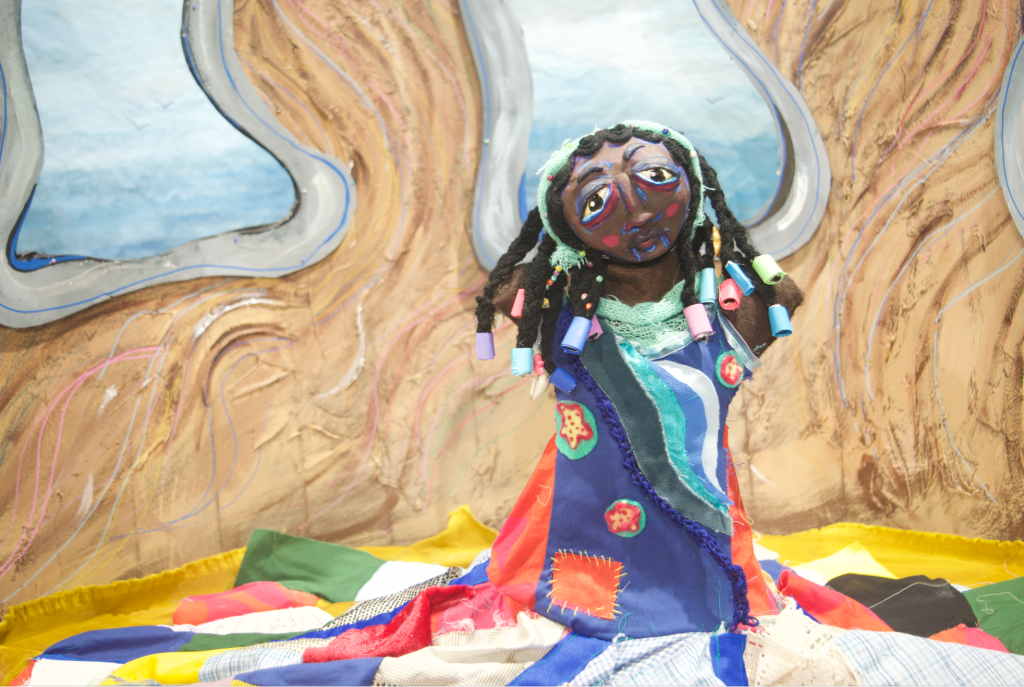
The use of puppetry organically lends itself to metaphor and imagery, allowing mere objects to convey complex and compelling emotions. What better medium to investigate difficult and abstract parts of the human experience? This was my methodology while planning my puppet show. The original title being, “A Princess’s Tears”. I envisioned telling a story about a Princess in a tower, left alone to ponder the weight of the expectations and role which she played in the lives of others. I chose the familiar fairy tale structure of this story in part for structural reasoning. Fairy tales often convey great depth and hidden meanings within the presentation of their characters. Archetypes which shape the way children see others, their homeland, and themselves. The other part was personal attachment, as as a child I eagerly gobbled up tales of princesses and fairies, the majority of which featured no Black women or girls which I could see myself.
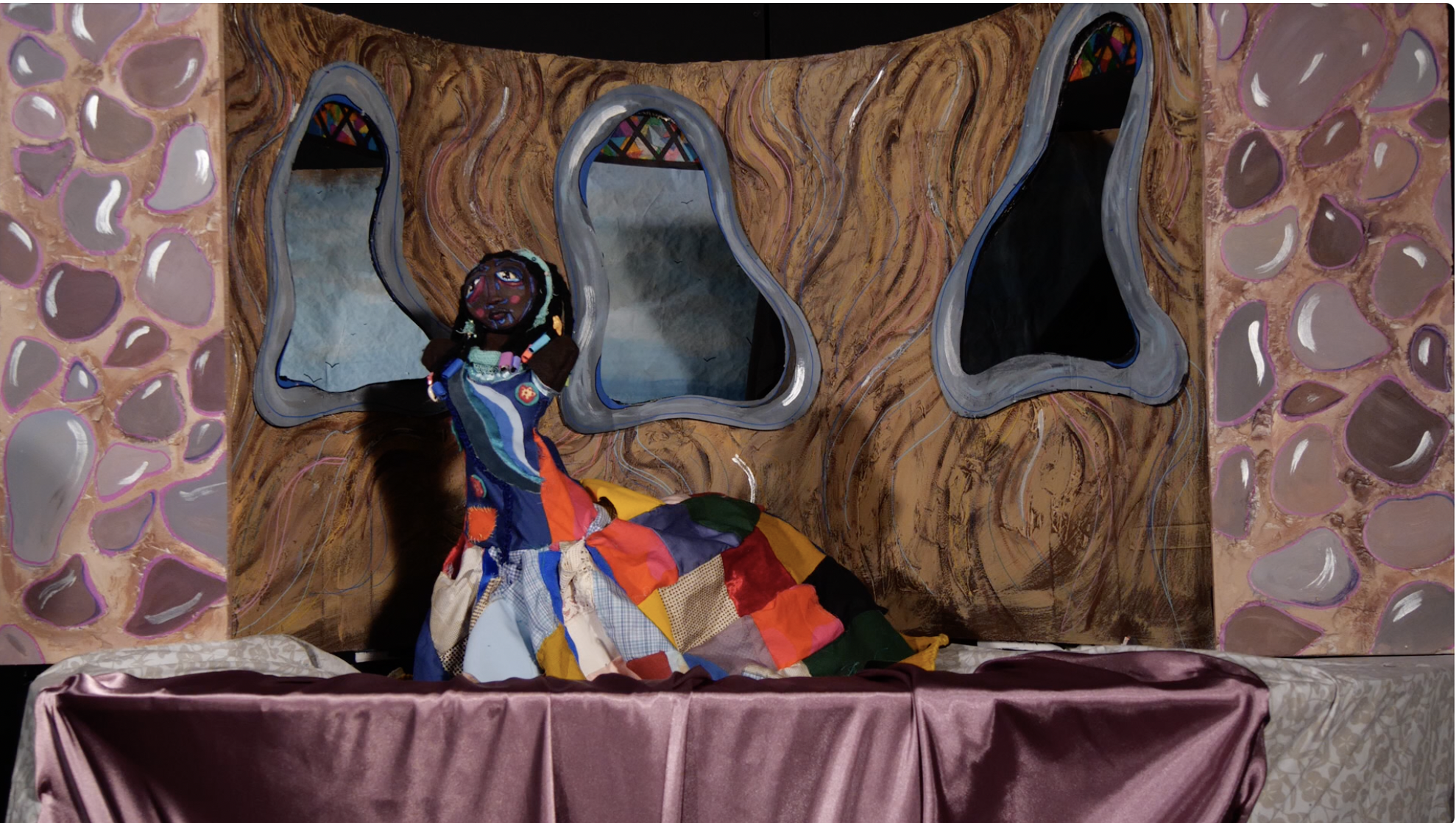
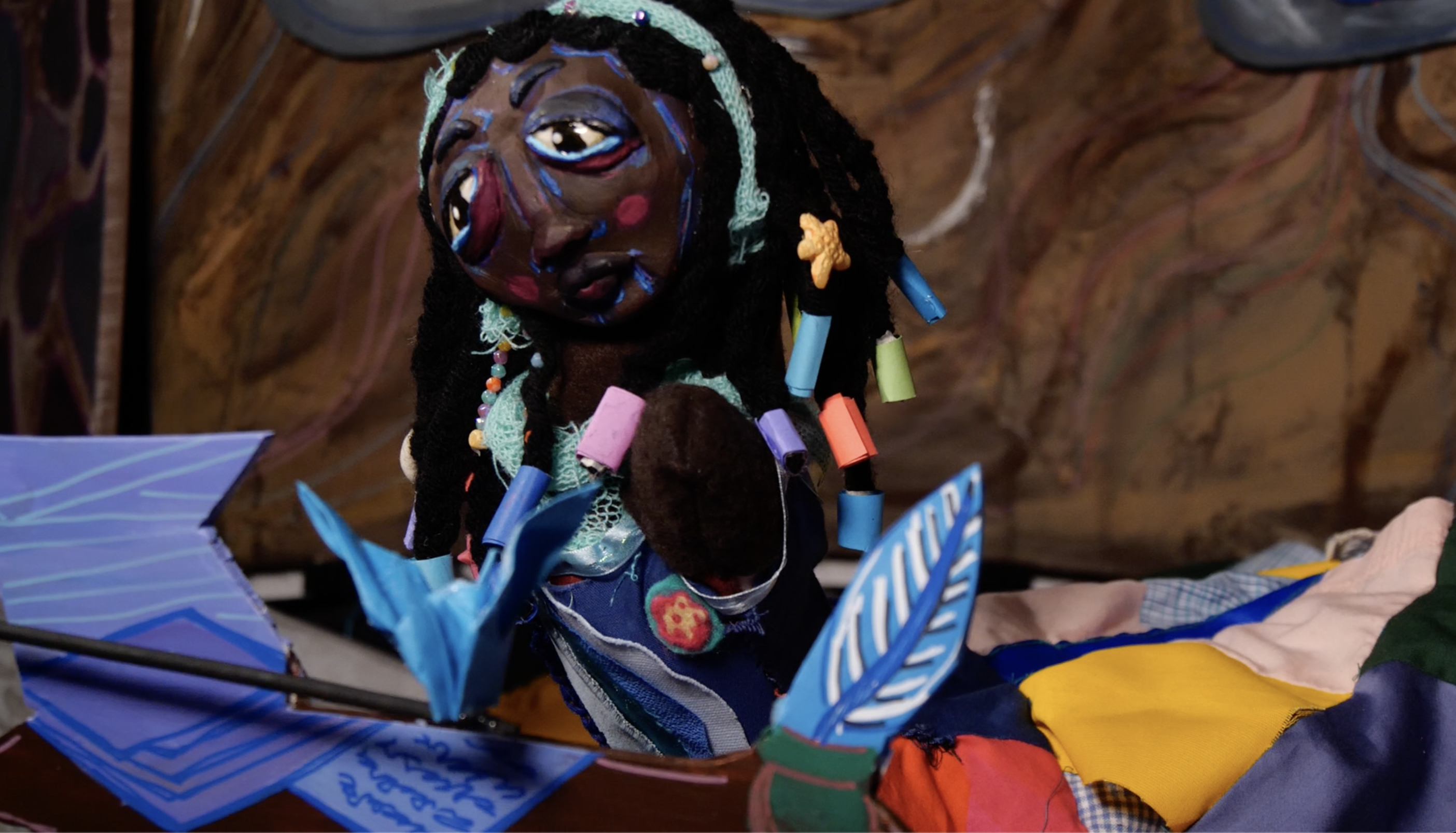
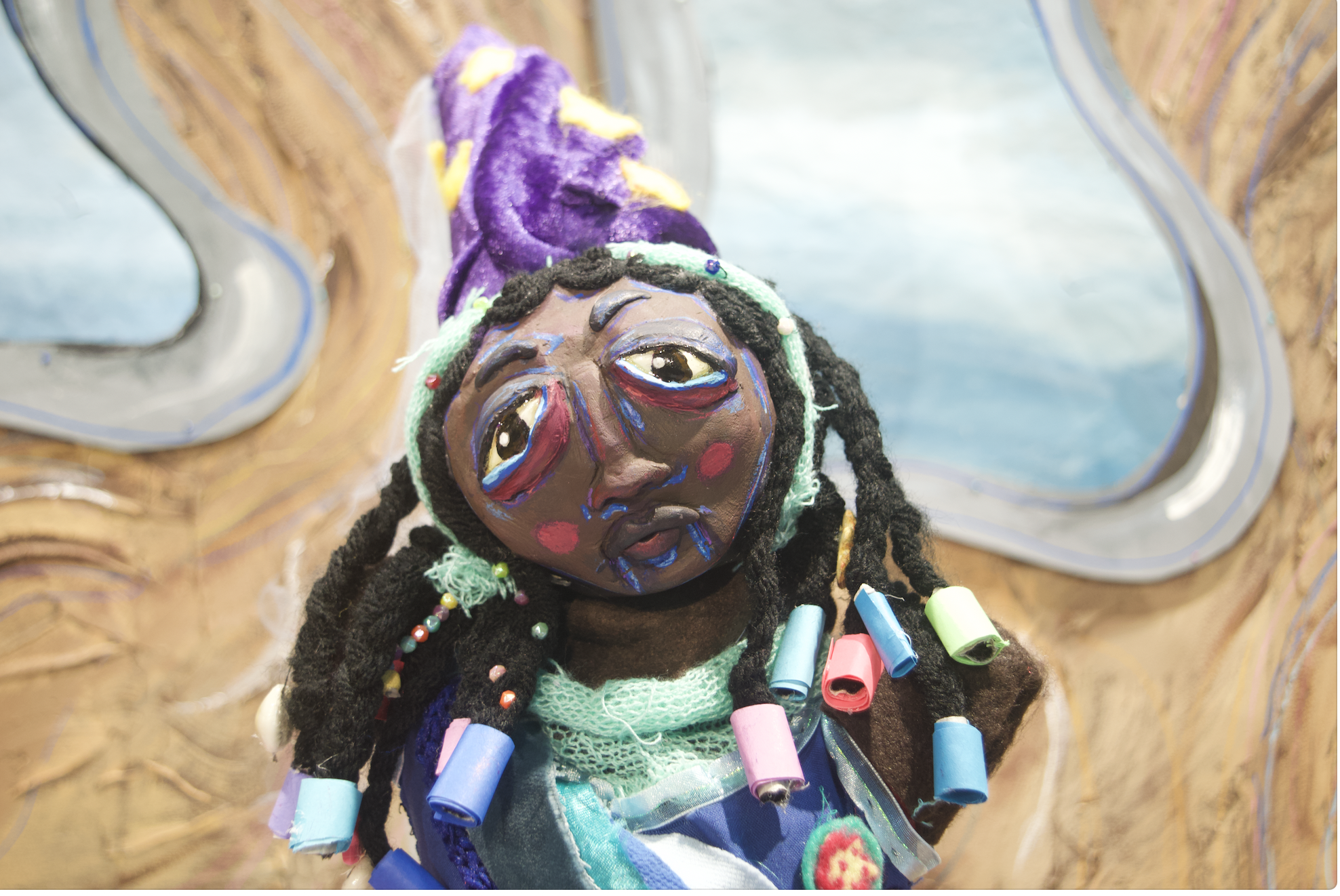
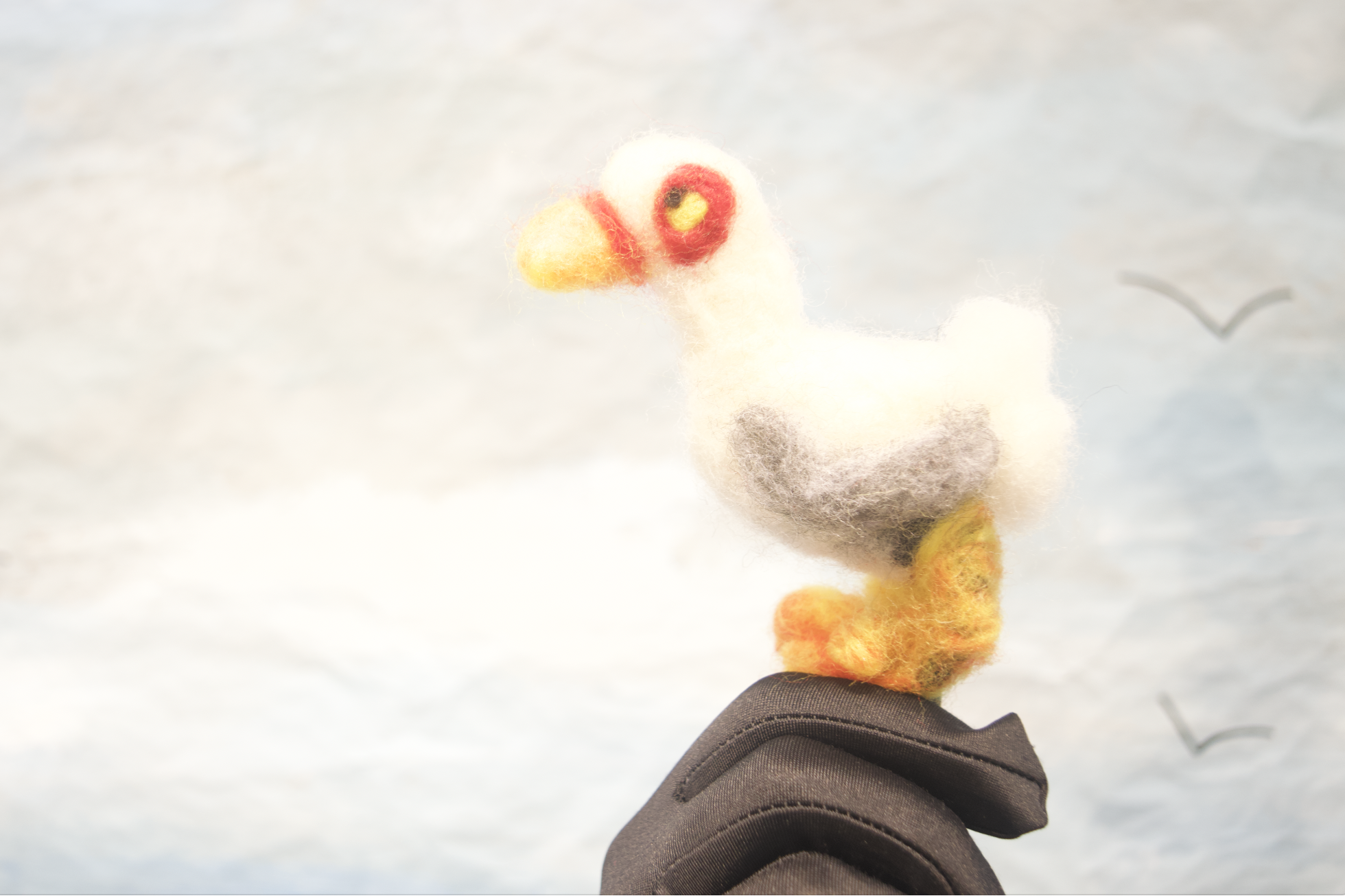
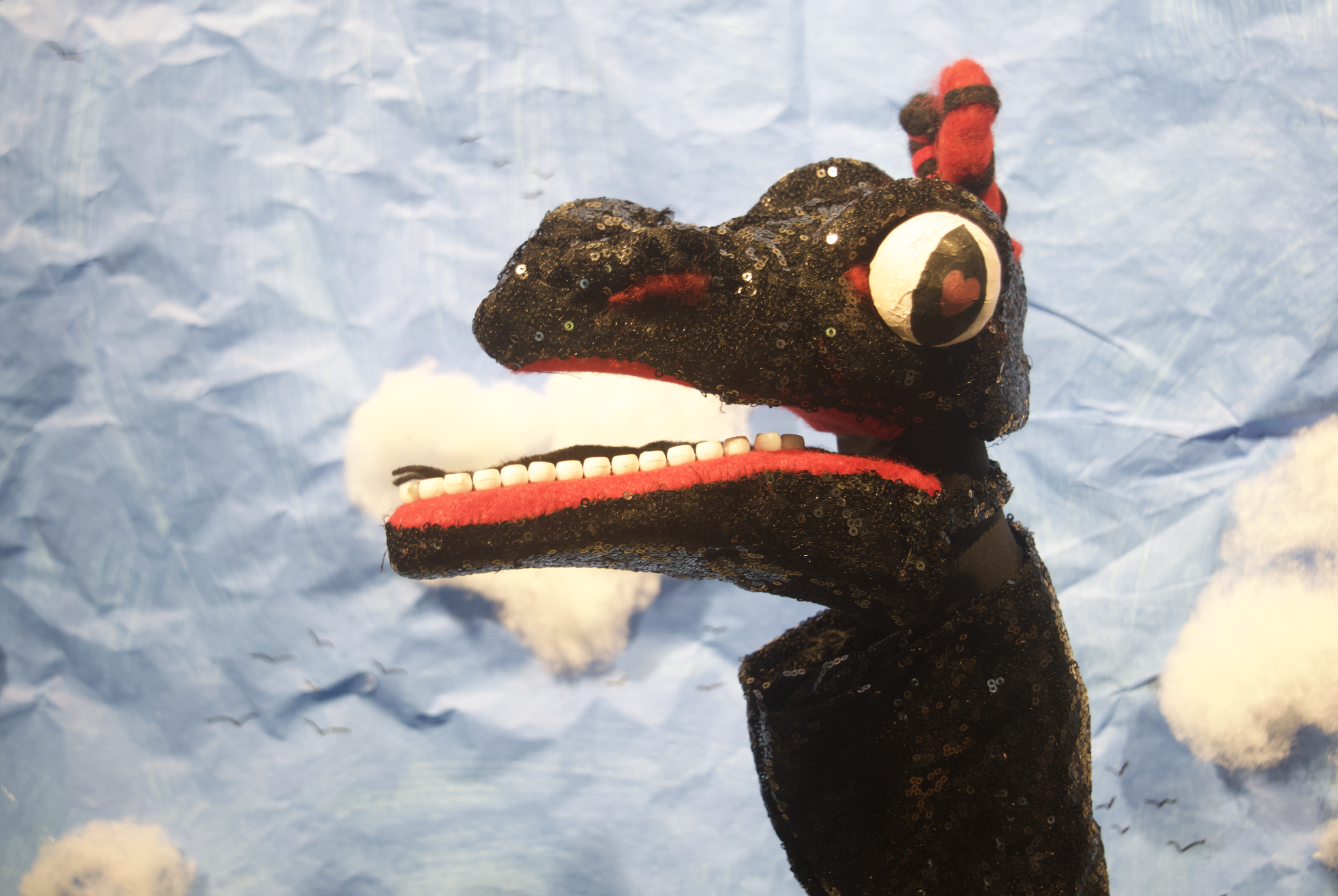
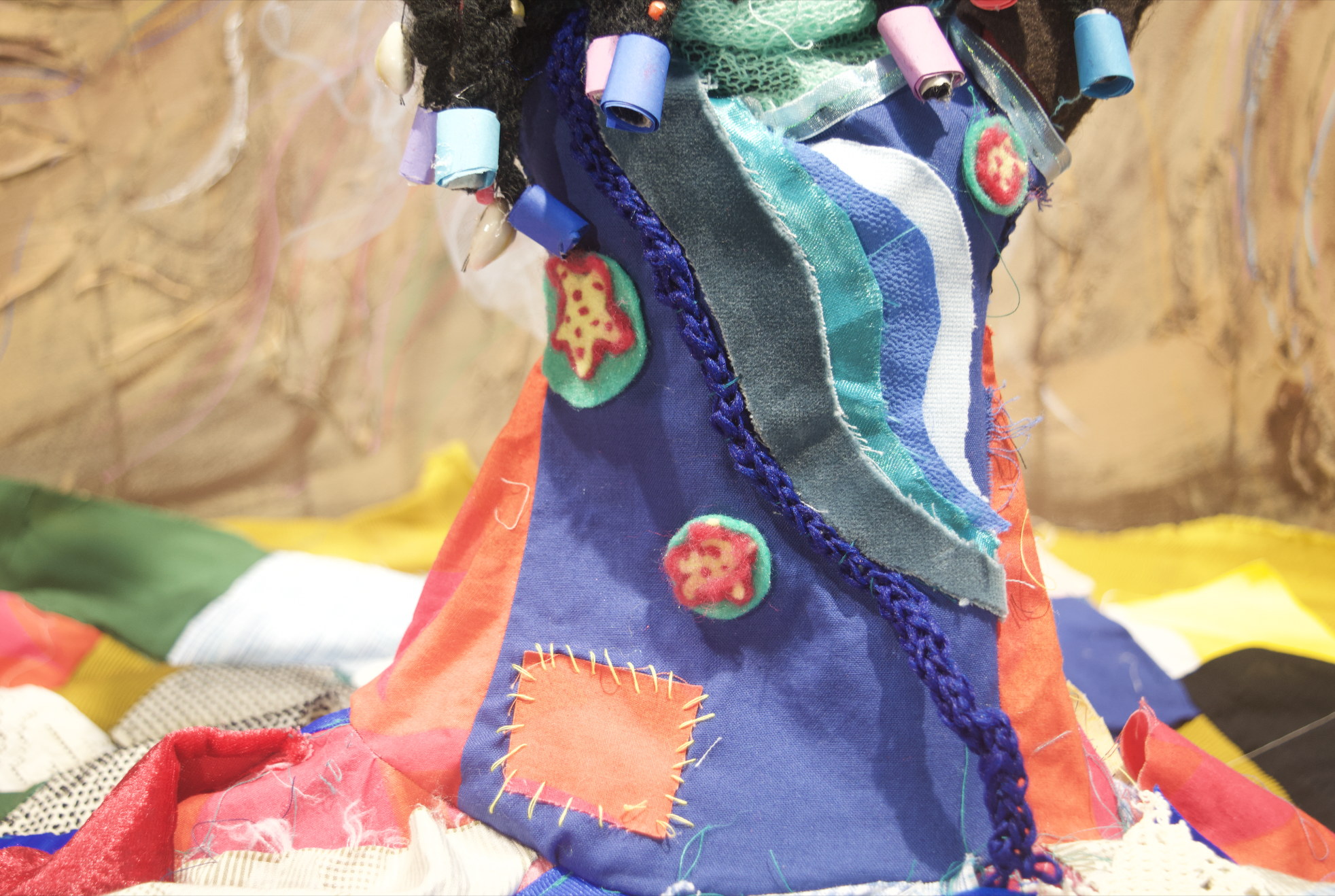
I wanted to use the fairytale format to convey real social demands that Black women and femme presenting people combat and experience. The intricacies of which are hardly acknowledged let alone depicted within mainstream media. Breaking down extensive political and social structural inequalities was no easy task, but I chose three which have had a substantial impact on my life. The expectation of constant emotional work, heteronormativity, and a limited acceptable representation of femininity.
These three have impacted the development of the person who I am today. I chose them to be represented by characters whom in fairytales, we the audience often root for. These characters are an integral part of these types of stories, holding power and influence the outcome. This transformed familiar symbols into contributors to controlling images and stereotypes, thus structural inequality. This was done so audience members could reevaluate their impact in perpetuating these painful and damaging ideas. Evil witches and curses may cause havoc, but in real life it is more often that ordinary people we interact with are helping perpetuate inequality.
The power of three is echoed within storytelling, and art the conclusion of which that repetition gives an act, and image, an idea solidity. Which is why the structure of the show has three challenges presented in characters, and three scenes of reflection leading to a final conclusion and epiphany.
In the original draft of the story, after facing a misguided assumption about her identity, the Princess would cry herself to sleep. Only casting away her tears at the end of the show with a sudden realization of her power. The impact of the tears was not what I intended. They were alluding to hopelessness, pity, and simple sadness. All valid and compelling emotions, but none of which I wished to be the focal point of my story. The image of the tear could not contain the depth of the experience and emotions that I was attempting to capture. It felt flat compared to the vastness of living as a Black woman.
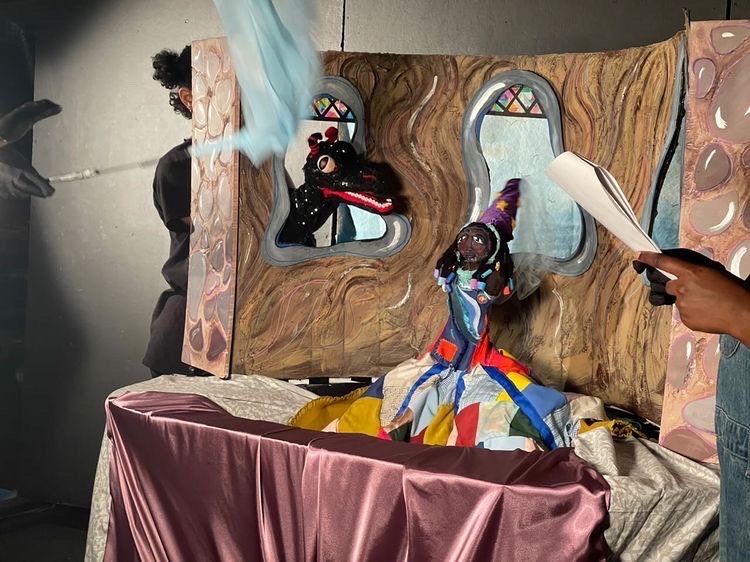
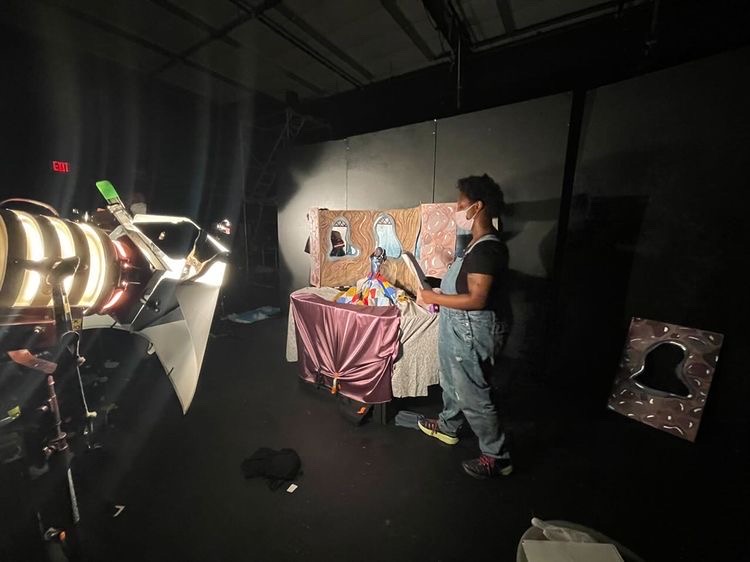
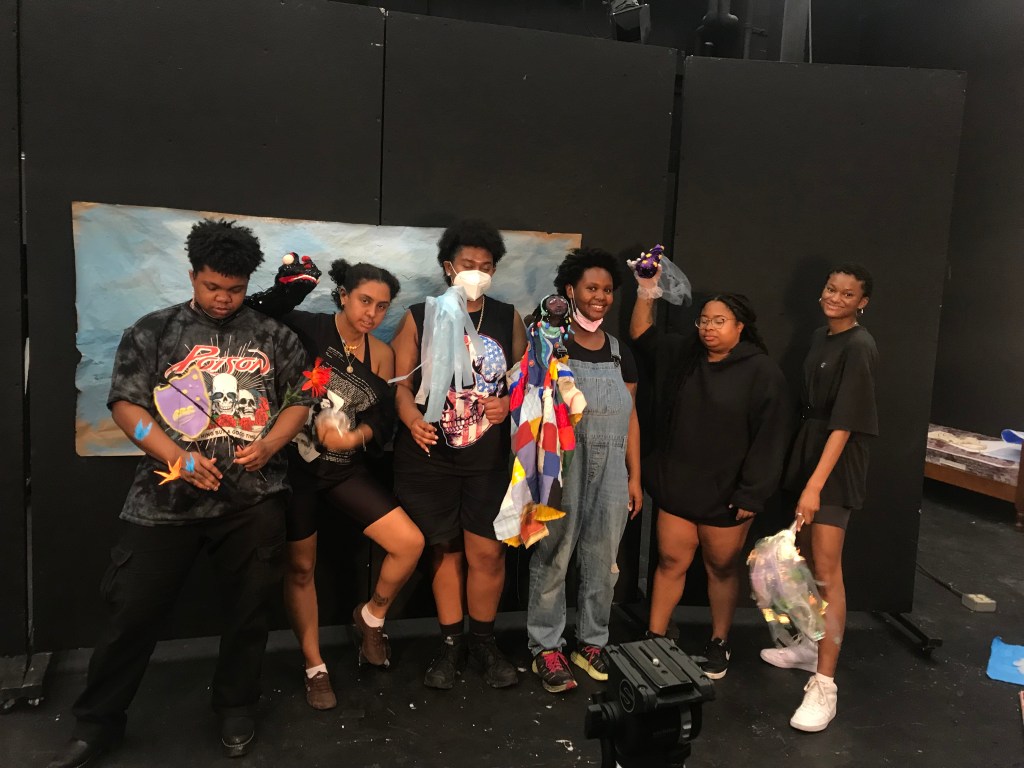
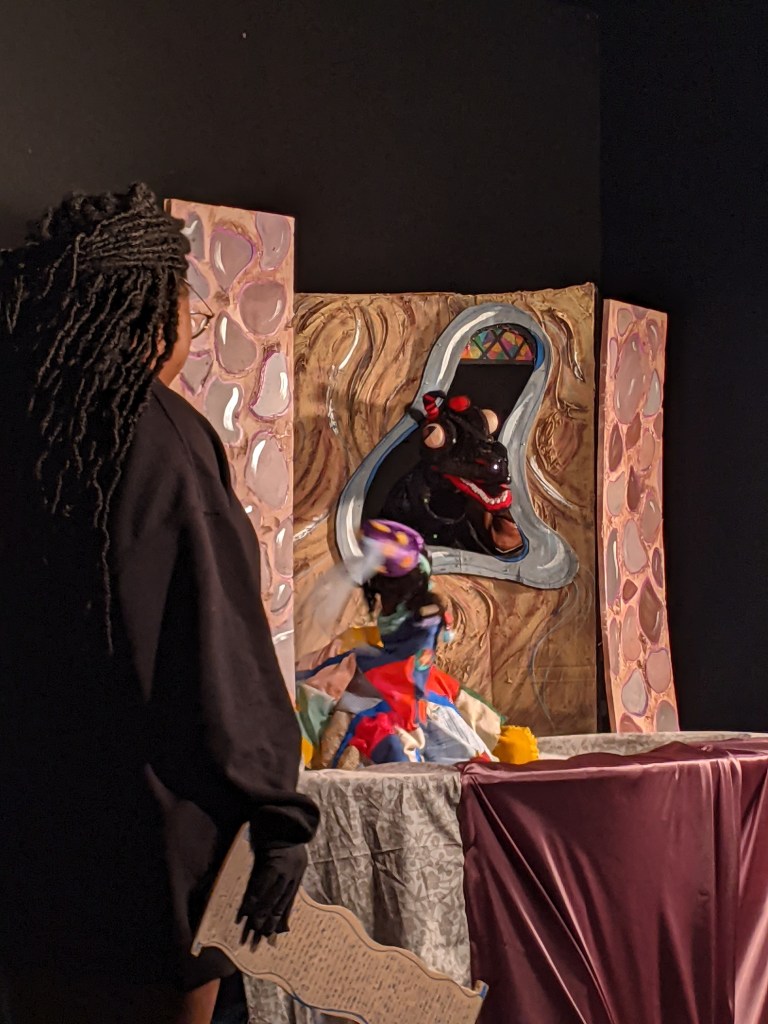
While Princess Amara is not a representation of myself, she does share the anxiety and difficulty that I have experienced, along with all Black women and femme presenting people. I often use my work to investigate and work through the complexities of the Black femme experience, which sometimes can feel so immaterial, yet clings to the heart and weighs it down. This weight and the lack of response to it was originally centered within the world building, but as I learned throughout the process of reading, writing and forming the show, is not the conclusion. Throughout the creation process, I shifted to centering the resilience and connectivity of Black women, and the power of self definition. Princess Amara can not change the expectations and assumptions of the role of a princess, nor can she change others’ perception of her due to her position. However, she can choose how she chooses to define what a princess means for her. Creating and responding to this definition in flux, expressing herself within her own guidelines and self measure. Freedom to fly, to explore, powered by the breath of one’s own lungs. Power derived not from tears, but from the wind. The visual and physical manifestations of the role expectations that Amara experiences is her princess hat. Which is designed to mimic a shorthand of princess imagery that is presented in popular culture.The tall cone with ribbon or tulle trailing behind it, that is used in princess costumes and cartoons. This cone does not reflect the true images of princesses, of any era, but actually was worn by noble women. However this distinct shape language has become synonymous with our mental image of what princesses are.
Princess Reflection
Much like the expectation of presentation of Black women in the media. The roles and shapes which we appear in the media, are mere cardboard cutouts of the richness of individuals who are flesh and blood. However these misguided stereotypes have become solidified and synonymous with Black women in the white, non Black, and sometimes Black male imagination. However, just like those stereotypes, Princess Amara’s princess hat contracts with her person. It doesn’t reflect who she is, and she can, and does decide to cast it aside.
“The Princess stands by the windowsill and watches the sea. The strands of wind swirl around her and she laughs. She slowly takes o the Princess hat and watches as its
tulle is flying in the wind. She tears it o and watches as it’s grabbed by the wind and floats o in the distance.
“After a minute she tosses the entire hat into the air and it too is carried out over the ocean till it floats oscreen. The Princess smiles.
She closes her eyes and once again her breath joins with the wind as it dances across the landscape.”
Princess Amara is aware of her power throughout the show, talking and flying with the wind in her own way after every main scene. It is amongst the wind that she feels most at peace, most herself. She tells confesses to the wind;
“You know, friend, this is one of my favorite things. Watching my breath join with you, so that a little bit of me, for a moment, can extend beyond the walls of this tower.”
It is only at the end however, that she decides to cast away the expectations of others, and live within her power at all times. The last lines of the show, spoken by Amara ring;
“I know everyone has expectations of me. My parents, the townspeople, Knight, even Fairy Godmother all expect me to act a certain way… to BE a certain way… But .. I.. I
I want to be the way I want. I have my own expectations for myself. I want to be the kind of Princess that moves with the wind.”
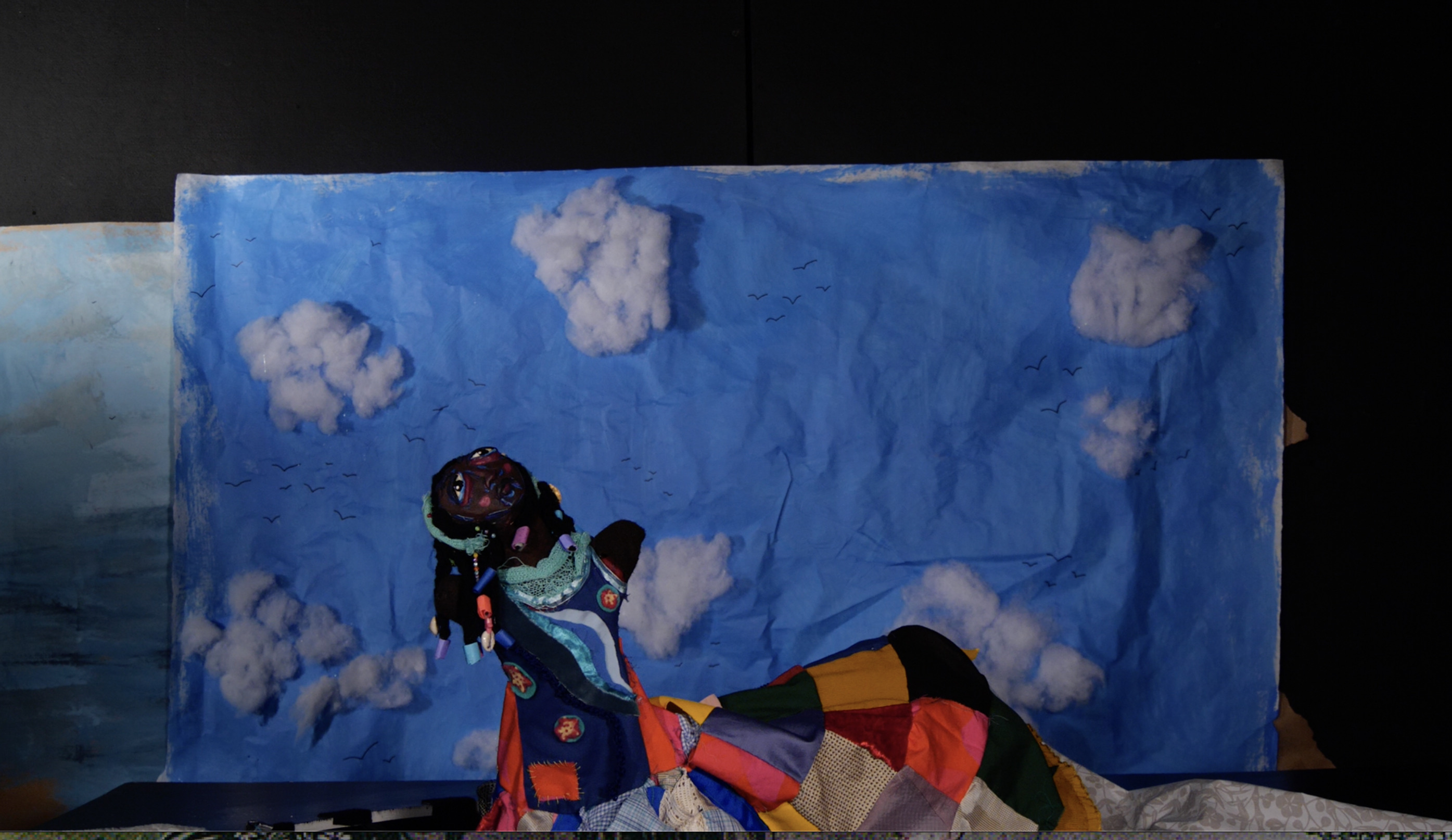
The beginning of this line Amara stammers slightly, collecting her thoughts and finding her footing. But her declaration of self definition is announced definitively and triumphantly. It is this decision that makes the walls of her tower slip away, allowing her to dance in the sky amongst the clouds and her friends.
The reading of Black feminist liteature formed a bridge to a tangible form of langue that explains the depths of the deepest and darkest corners of my mind. Many a time I was reading Black feminist text, and felt that the words of were the purest expression of my feeling and experiences which I had no words. Giving me definitive language to identify not only my own feelings, but the causes of many of ,what I thought, were individual insecurities and hardships. Many readings examined the act of Black women being denied full societal citizenship, and the way this act is expressed politically, socially and in the media. Exploring the definition of choreography as both a movement and an apparatus of political control and restriction. This led to the conclusion of Princess Amara using choreography, movement, and breath as a form of resistance and self definition.
I often succumb to the pressures and unhealthy work ethics of RISD and the art world that value production and product above all else. Instead I was allowed and assisted in growing my ideas and intentions of this show organically. I have learned so much about Black women as community and as lived experience, and have grown so much as a person because of this process. Connecting me to a community of Black
women that extends beyond time and space, along with a very present and current community of Black puppeteers. All of which share the same passions and drives and I do. “The Princess that Danced With The Wind” is a love letter to Black women and femme people, but ultimety a love letter to my younger self. It is essential to see yourself represented in a way that makes you feel inherently worthy, and empowered to be yourself to the fullest degree. Especially when you inhabit a marginalized body that the world was built to exploit and discard.
Through the process of formulating this show I was able to realize and express the concept of true freedom being the power of self definition. Discovering who you are as a person, outside the roles you serve other people. Shifting from tears, to flying amongst the clouds.
Princess- Leah
Dragon- Nati
Wind- Trey
Majesty #1- Garner
Majesty #2- Celeste
Knight- Garner
Fairygomother- Celeste
Lights:+ Camera Sofia
Props and Princess hat Hand + Princess’s breath: +Mya
 Leah Lara 2026